Every piece of cash flow advice eventually comes back to the same starting point: you need to know what you spend. Without accurate, categorized expense data, cash flow management is just guessing.
The good news: expense tracking doesn’t have to be painful. With the right system, it takes minutes per week — and the cash flow visibility it creates is transformative.
Why Expense Tracking Is the Foundation of Cash Flow
Cash flow has two sides: money coming in and money going out. Most freelancers obsess over the income side — tracking invoices, chasing payments, monitoring revenue. But the expense side is where cash flow problems hide.
Without expense tracking, you can’t:
- Know your actual burn rate — How much cash you need each month to keep the lights on
- Spot cash leaks — Subscriptions, fees, and small charges that drain your account
- Forecast accurately — Predict future cash needs based on real spending patterns
- Maximize deductions — Every missed deduction is money you overpaid in taxes
- Make informed decisions — Know whether you can afford a new hire, equipment purchase, or investment
The 3-Layer Expense Tracking System
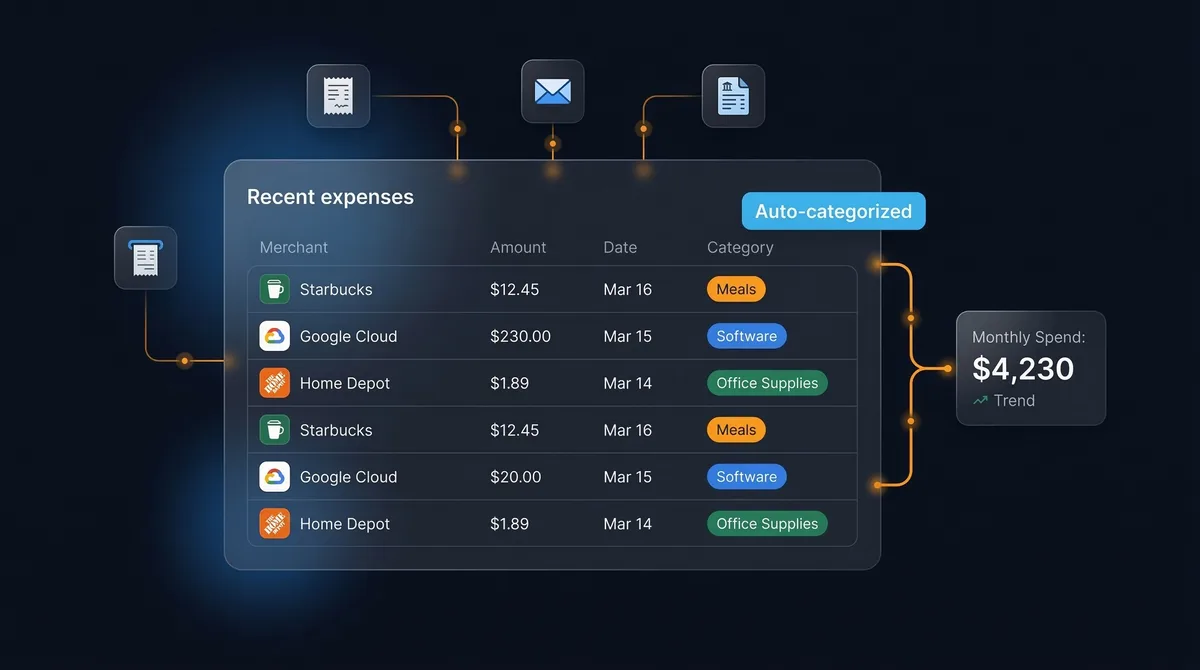
The best expense tracking catches everything through multiple channels:
Layer 1: Receipt Capture
Every time you make a purchase, capture the receipt immediately. An AI receipt scanner like SparkReceipt extracts the vendor, amount, date, tax, and currency automatically — no manual data entry.
This catches:
- In-store purchases
- Cash payments
- Restaurant and travel expenses
- Any purchase where you receive a paper or PDF receipt
Layer 2: Email Receipt Capture
A huge portion of modern business spending happens online. Connect your email inbox and let AI find and process digital receipts automatically — from SaaS subscriptions to online orders to travel bookings.
This catches:
- Software subscriptions
- Online purchases
- Travel bookings
- Digital services
Layer 3: Bank Statement Reconciliation
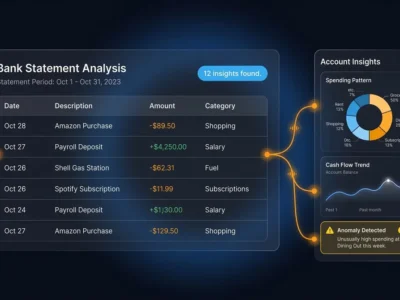
Even with receipt and email capture, some expenses slip through. Upload your bank statements monthly to catch everything else and reconcile against your tracked expenses.
This catches:
- Direct debits and auto-payments
- Forgotten subscriptions
- Small charges you didn’t receipt
- Bank fees and interest charges
From Expense Data to Cash Flow Insight
Once your expenses are tracked and categorized, you unlock powerful cash flow insights:
Calculate Your Monthly Burn Rate
Average your last 3 months of total expenses. This is your baseline — the minimum cash you need each month to operate. If your bank balance ever drops below 1x this number, you’re in the danger zone. Below 3x, you should be building reserves.
Identify Fixed vs. Variable Expenses
Categorized expenses reveal which costs are fixed (rent, insurance, subscriptions) and which are variable (supplies, travel, project costs). Fixed expenses are your floor — the minimum cash outflow regardless of revenue. Variable expenses are where you have flexibility during tight months.
Spot Seasonal Patterns
When you have several months of categorized data, patterns emerge. Maybe Q4 spending spikes because of annual renewals. Maybe summer months are lighter because travel drops. These patterns make cash flow forecasting dramatically more accurate.
Find the Leaks
Sort expenses by category and look for surprises. Common cash leaks:
- Multiple tools doing the same job (2-3 project management tools, duplicate cloud storage)
- Upgraded plans you could downgrade
- Subscriptions for tools you haven’t used in months
- Services you forgot you signed up for
The Monthly Expense-to-Cash-Flow Review
Set aside 30 minutes on the 1st of each month:
- Review categorized expenses — Any unexpected charges? Anything higher than usual?
- Compare to last month — Are expenses trending up, down, or flat?
- Check for waste — Cancel or downgrade anything unnecessary
- Update your forecast — Adjust next month’s expected expenses based on what you’ve learned
- Share with your accountant — Use free accountant access to give them the latest data
Common Expense Tracking Mistakes
- Waiting until tax season — By then, receipts are lost and memory is unreliable. Track in real-time.
- Only tracking big expenses — It’s the small recurring charges that quietly drain cash flow.
- Not categorizing — A pile of uncategorized expenses tells you nothing about cash flow patterns.
- Mixing personal and business — Use separate accounts and cards. It makes tracking clean and tax deductions clear.
Key Takeaways
- Expense tracking is the foundation of cash flow management — without it, you’re guessing
- Use a 3-layer system: receipt capture, email receipts, and bank statement reconciliation
- Calculate your monthly burn rate to know your minimum cash needs
- Review expenses monthly to spot leaks and update forecasts
- Automate as much as possible — manual tracking doesn’t stick
Related reading: Cash Flow Management for Freelancers and Small Business: The Complete Guide