
Cents Per Km Calculator
Estimate your car expense deduction at the ATO rate — and see what the 5,000 km cap costs you.
Estimate only, based on ATO cents per kilometre rates. Your actual deduction depends on your circumstances — check with your accountant or the ATO.
Track every business kilometre automatically
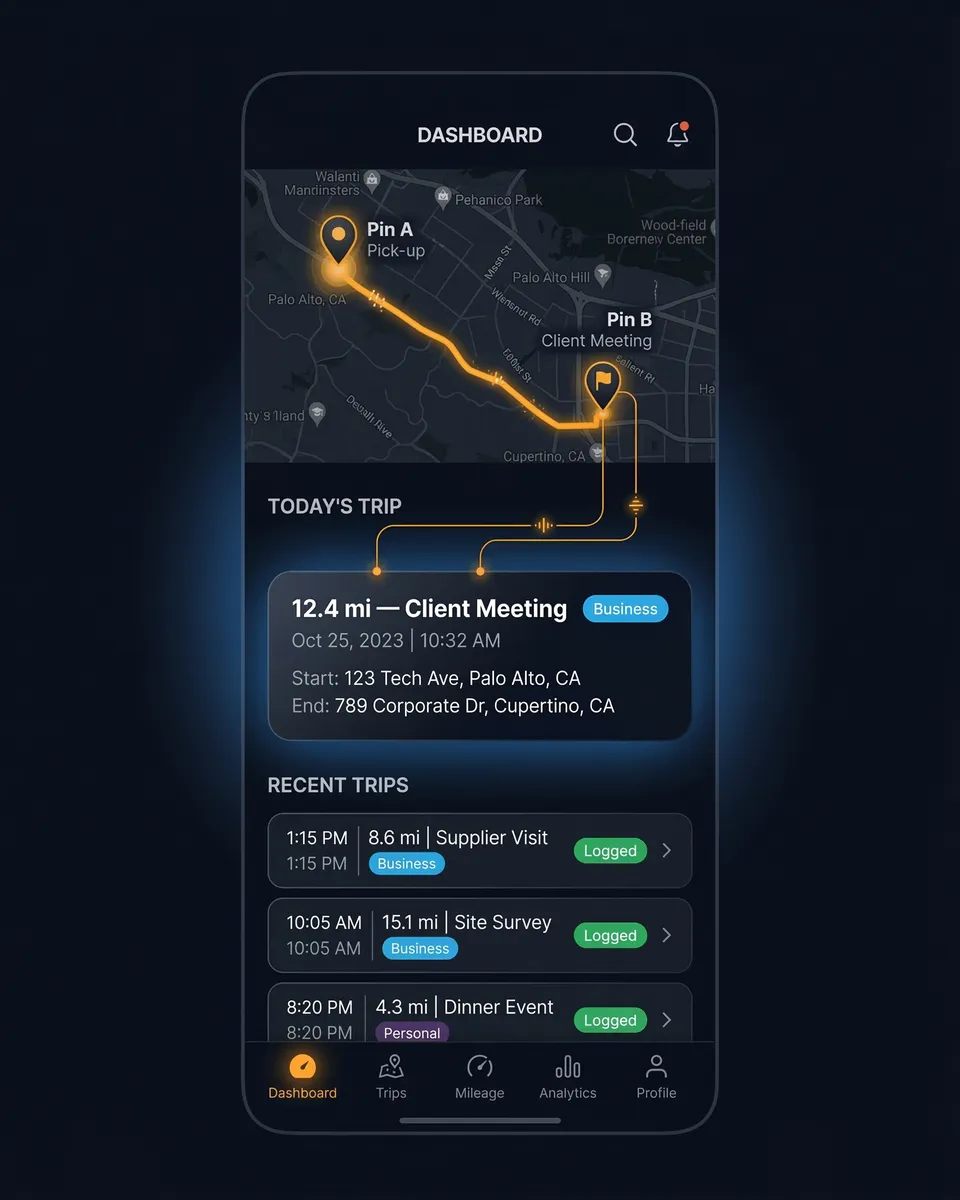
A calculator only helps if your kilometres are right. SparkReceipt records business trips by GPS or by hand, in the same app that scans your receipts — so at tax time the number you type in here is one you can actually stand behind. Available on iPhone, Android, and the web.
How the Cents Per Km Method Works
One flat rate, everything included
The ATO lets you claim work-related car expenses at a flat rate per business kilometre. For the 2026–27 income year the rate is 91 cents — up from 88 cents in 2025–26. That 91 cents is a 89 cent base rate plus a one-off 2 cent uplift for 2026–27 only.
The rate is all-inclusive. It already covers fuel, registration, insurance, servicing, tyres, and depreciation — so you cannot claim any of those separately on top. It is one method or the other.
The catch is the cap. You can claim a maximum of 5,000 business kilometres per car, per year using this method. At 91 cents that is a maximum deduction of $4,550 per car. Drive more than 5,000 business kilometres and the extra simply does not count under this method.
You do not need written evidence of every trip to use the cents per km method, but you do need to be able to show how you worked out your kilometres — a diary, a pattern of regular travel, or a tracking app.
Cents Per Km vs Logbook: Which One Wins?
The cap is usually the deciding factor
| Cents per km | Logbook | |
|---|---|---|
| Cap | 5,000 km per car | None |
| Maximum claim | $4,550 at the 2026–27 rate | Business-use % of all running costs |
| Records needed | How you calculated your kilometres | Valid 12-week logbook, plus receipts for running costs |
| Logbook validity | n/a | 5 years, if your pattern of use does not change |
| Best for | Occasional business driving, low kilometres | High kilometres, expensive vehicles, high business-use % |
If you drive well under 5,000 business kilometres, cents per km is almost always the right answer — it is simpler and the difference is small.
Once you are meaningfully over the cap, the logbook method usually wins, sometimes by thousands. The calculator above shows exactly what the capped kilometres would have been worth, which is the number to weigh against the effort of keeping a logbook and receipts.
The trade-off is real, though: the logbook method needs a valid 12-week logbook and evidence of your actual running costs. That means keeping fuel, servicing, insurance, and registration receipts all year.
Keep the Evidence, Whichever Method You Pick
Cents per km needs your kilometres. The logbook method needs your kilometres and every running cost receipt. Either way, the records are what turn an estimate into a claim you can defend.
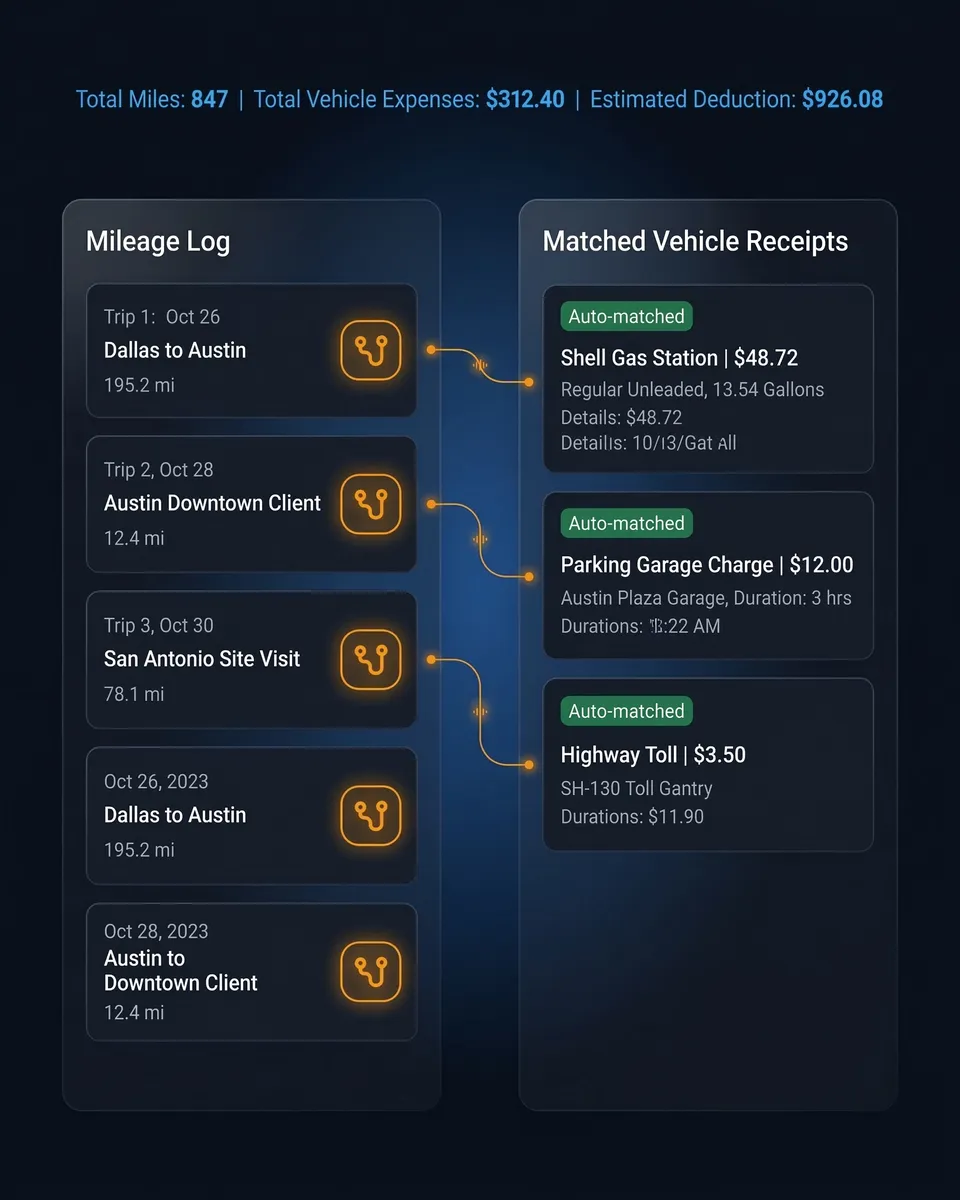
SparkReceipt keeps both in one place — trips logged by GPS or by hand, and fuel, servicing, and insurance receipts captured by photo or pulled automatically out of your inbox. If you switch methods later, the evidence is already there rather than needing reconstruction.
See our full guide to the ATO cents per km rate for the detail, and ATO record keeping requirements for how long you need to hold on to it all.
Frequently Asked Questions
91 cents per business kilometre for the 2026–27 income year, which started on 1 July 2026. That is a 3 cent increase on the 88 cents that applied in 2025–26, made up of an 89 cent base rate plus a one-off 2 cent uplift for 2026–27.
The cents per km method caps you at 5,000 business kilometres per car per year. At the 2026–27 rate of 91 cents, that is a maximum deduction of $4,550 per car. If you own two cars used for business, each has its own 5,000 km cap.
You do not need receipts for your running costs, because the rate already covers them. But you do need to be able to show how you calculated your business kilometres if the ATO asks — a diary, a record of regular trips, or a tracking app. A guess you cannot explain is not a calculation.
Travel between workplaces, trips to clients or customers, driving to pick up supplies, and travel to work-related meetings or training. Your normal commute between home and a regular place of work does not count, even if you check email on the way.
If you drive under 5,000 business kilometres, cents per km is simpler and the difference is usually small. Over the cap, the logbook method has no ceiling and often produces a much larger deduction — but it requires a valid 12-week logbook and receipts for all your running costs. The calculator above shows what the capped kilometres would have been worth, which is the figure to weigh.
Yes, you can choose the method that suits you each income year, and you can use different methods for different cars. Keeping trip records and running cost receipts all year keeps both options open, rather than locking you into whichever one you happened to have evidence for.
A valid 12-week logbook generally covers 5 years, provided your pattern of business use does not change significantly. If your circumstances change — a new job, a different territory, a change in how much you drive — you need a fresh one.
The cents per km method is available to eligible taxpayers claiming work-related car expenses, including sole traders and employees using their own car for work. It applies to cars you own or lease — not to vehicles designed to carry a tonne or more, or nine or more passengers, which use different rules.
Log Your Trips as You Drive Them
Get StartedExplore More Features
Mileage Tracker
Log business kilometres automatically
Receipt Scanner
Scan receipts with AI in seconds
Expense Tracker
Track every business expense automatically
Bank Statement Extractor
Extract and match bank transactions
Expense Reports
Generate reports in PDF, Excel, or CSV
Email Receipts
Auto-import receipts from your inbox