
Working From Home Calculator
Estimate your HMRC use-of-home deduction using the simplified flat rate.
The flat rate covers heat, light, and power for your workspace. Phone and internet aren't included — claim the business proportion of those bills separately.
Estimate only, based on HMRC simplified (flat-rate) working-from-home rates. You can instead claim a share of your actual household costs if it works out higher. Check with your accountant or HMRC.
Keep the receipts that back it up
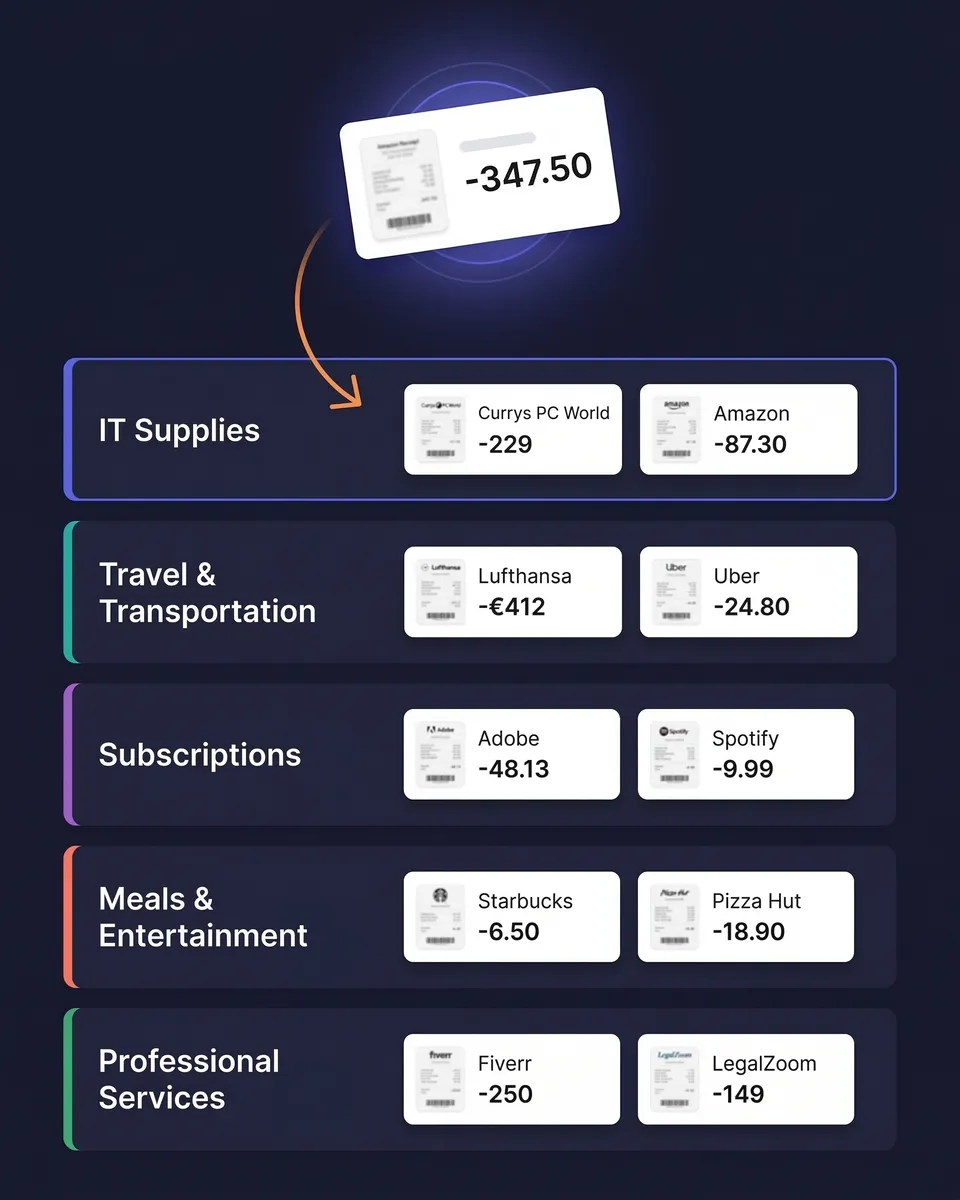
Whichever method you use, HMRC expects records. SparkReceipt's expense tracker scans and categorises your utility, broadband, and equipment receipts automatically — so the figures behind your use-of-home claim are always there.
How the HMRC Flat Rate Works
A monthly amount set by your hours
If you work at least 25 hours a month from home, HMRC's simplified expenses let you claim a flat monthly amount instead of working out actual costs:
| Hours worked from home per month | Flat rate |
|---|---|
| 25 to 50 | £10 a month |
| 51 to 100 | £18 a month |
| 101 or more | £26 a month |
The flat rate covers the extra heat, light, and power for your workspace. It does not cover phone and internet — you claim the business proportion of those bills separately. If you work fewer than 25 hours a month from home, you can't use the flat rate, but you can still claim a share of your actual costs.
Flat Rate vs Actual Costs
Which is worth more?
The flat rate is quick and needs almost no record-keeping, and for most sole traders it's the simpler choice. The actual-costs method can be worth more if your household bills are high: you work out a reasonable business proportion of your rent or mortgage interest, council tax, insurance, and utilities — usually by the number of rooms used for business and the time they're used for it.
Our guide to flat-rate expenses covers when each method wins. If you go the actual-costs route, keeping every household bill in one place is what makes the apportionment defensible.
Frequently Asked Questions
Using HMRC's simplified flat rate, you can claim £10 a month if you work 25–50 hours from home, £18 for 51–100 hours, or £26 for 101 or more hours a month. That covers heat, light, and power for your workspace. Phone and internet are claimed separately by business proportion.
It's a fixed monthly amount based on how many hours a month you work from home: £10 (25–50 hours), £18 (51–100 hours), or £26 (101+ hours). It applies to self-employed people using simplified expenses and needs almost no record-keeping.
Yes. You can claim a reasonable business proportion of your rent or mortgage interest, council tax, insurance, and utility bills — typically apportioned by the number of rooms used for business and the time they're used. This can be worth more than the flat rate if your household bills are high, but it requires you to keep the underlying bills.
To use the simplified flat rate, you must work at least 25 hours a month from home. Below that, the flat rate isn't available, but you can still claim the business proportion of your actual costs.
No. The flat rate only covers the extra heat, light, and power for your workspace. Phone and broadband are claimed separately — work out the business proportion of each bill and claim that.
For the flat rate, keep a note of the hours you work from home each month. For the actual-costs method, keep the household bills you're apportioning. SparkReceipt scans and categorises those receipts and bills automatically so the evidence is there if HMRC asks.