
CRA Mileage Rate Calculator
See the CRA reasonable per-kilometre amount — and how vehicle deductions work if you're self-employed.
Are you self-employed?
This per-kilometre figure is the CRA's reasonable allowance — the benchmark for an employer reimbursing an employee, or an employee's own claim. If you are self-employed, you don't deduct kilometres × rate. You deduct your actual vehicle costs (fuel, insurance, maintenance, lease or capital cost allowance) multiplied by your business-use percentage — business kilometres divided by total kilometres driven. Keep a logbook and every receipt.
Estimate only, based on CRA prescribed per-kilometre rates. Your actual position depends on your circumstances — check with your accountant or the CRA.
Track every kilometre automatically
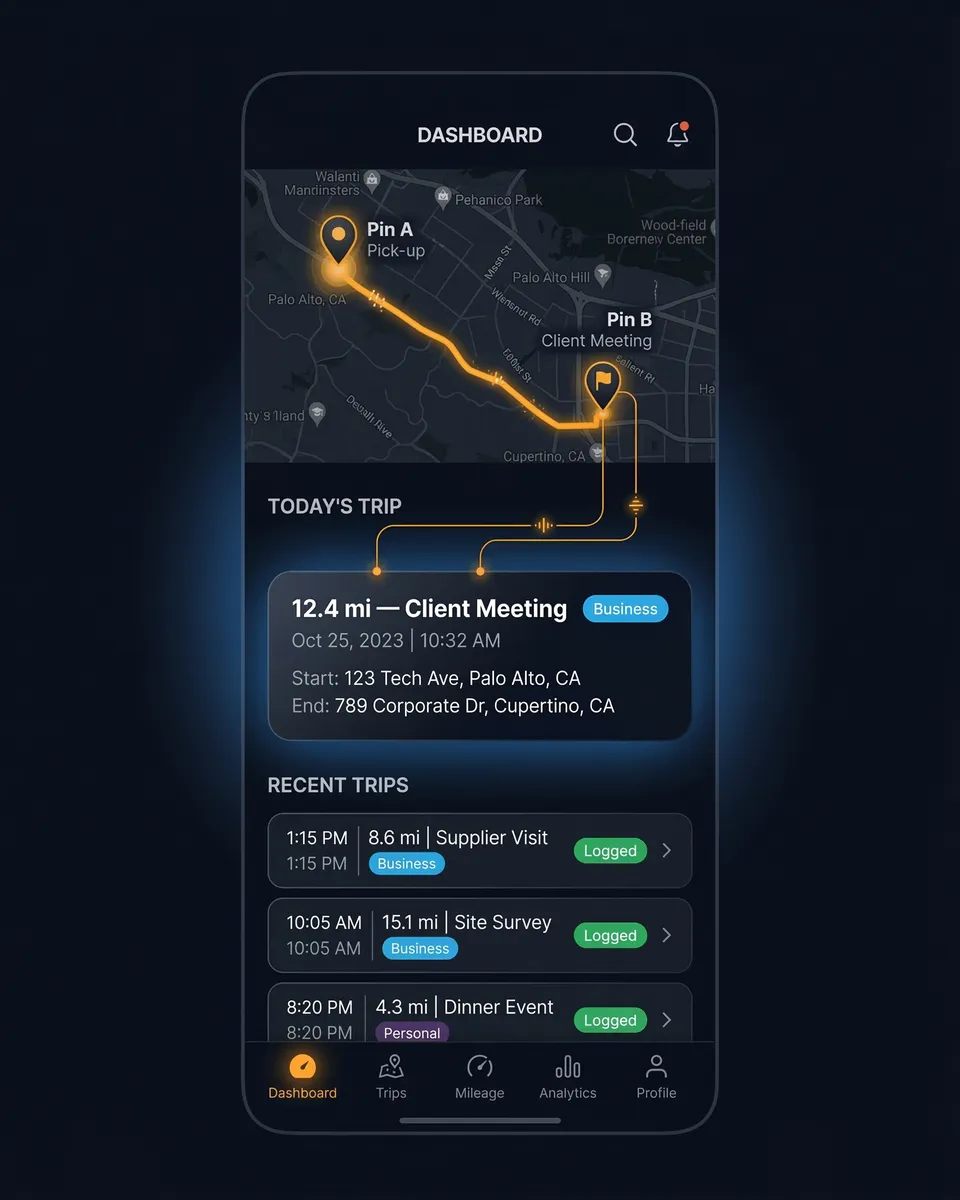
SparkReceipt's mileage tracker records your business trips by GPS or by hand, right in the same app that scans your receipts — so your logbook and your vehicle-expense receipts live in one place. Available on iPhone, Android, and the web.
What the CRA Per-Kilometre Rate Is — and Isn't
The reasonable allowance rate
The CRA sets a prescribed per-kilometre rate that it treats as a reasonable allowance. For 2026 in the provinces it's 73¢ for the first 5,000 business kilometres and 67¢ for each kilometre after that; in the territories it's 77¢ and 71¢.
That rate is the benchmark for two situations:
- An employer paying an employee a per-kilometre allowance for using their own vehicle.
- An employer's deduction for a tax-free allowance it pays, which is capped at this rate.
The CRA generally accepts an allowance at this rate as reasonable. It stays tax-free if it covers only business kilometres and your employer doesn't also reimburse the same use.
Self-Employed? You Deduct Actual Costs Instead
Business-use percentage, not kilometres × rate
If you're a sole proprietor, you don't deduct kilometres × the CRA rate. You deduct your actual vehicle costs — fuel, insurance, licence and registration, maintenance, interest, lease costs, and capital cost allowance — multiplied by your business-use percentage:
Business-use % = business kilometres ÷ total kilometres driven in the year
So if you drove 30,000 km and 12,000 were for business, 40% of your eligible vehicle costs are deductible. That's why the logbook matters: you need both the business kilometres and the total. Our guide to vehicle expenses for the self-employed walks through which costs count, and the 2026 CRA mileage rate explains the allowance in more depth.
SparkReceipt keeps the logbook and the vehicle receipts together, so working out your business-use percentage at tax time is a matter of reading one number, not reconstructing a year.
Frequently Asked Questions
For 2026, the CRA prescribed per-kilometre rate in the provinces is 73¢ for the first 5,000 business kilometres and 67¢ for each kilometre after that. In the territories it's 77¢ and 71¢. These are the rates the CRA treats as a reasonable allowance.
Not as kilometres × the CRA rate. Self-employed people deduct their actual vehicle costs — fuel, insurance, maintenance, interest, lease, and capital cost allowance — multiplied by their business-use percentage (business kilometres ÷ total kilometres). The per-kilometre rate is for employee allowances and reimbursements, not a sole proprietor's deduction.
The higher rate (73¢ for 2026 in the provinces) applies only to the first 5,000 business kilometres in the year. Every business kilometre above 5,000 is rated at the lower figure (67¢). The calculator applies both tiers automatically.
Divide your business kilometres by the total kilometres you drove the vehicle in the year. If you drove 20,000 km total and 8,000 were for business, your business-use percentage is 40% — so 40% of your eligible vehicle costs are deductible. A logbook that records both figures is what makes this defensible if the CRA asks.
Yes. Whether you're claiming an allowance or deducting actual costs, the CRA expects a logbook showing the date, destination, purpose, and distance of your business trips. SparkReceipt records trips by GPS or by hand alongside your vehicle receipts.
A per-kilometre allowance paid at or below the CRA reasonable rate is generally tax-free and isn't included in the employee's income. An allowance that's unreasonably high or low, or a flat monthly amount, can be treated as a taxable benefit — check the specifics with your accountant or the CRA.