
Self-Employed Tax Calculator
See your federal and provincial tax and your CPP for 2026 in seconds, then keep the records that make the number right at filing time.
Enter your annual profit, pick your province or territory, and this calculator shows your federal income tax, provincial tax, and CPP contributions for 2026, then your take-home. Your bill starts from profit, so the expenses you record are what lower it.
Your self-employment profit for the year: business income minus deductible expenses. Assumes this is your only income.
Provincial income tax and the pension plan vary by province. Quebec uses QPP and its own income tax.
Enter your annual profit to see your federal and provincial tax and pension contributions for 2026.
Estimates only, for the 2026 tax year, assuming self-employment is your only income and you claim the basic personal amount. It includes the Ontario surtax and health premium, and applies both halves of CPP or QPP, but it does not model CPP/QPP deductibility, the federal basic personal amount reduction on high incomes, EI, or Quebec parental insurance. Check your figures with the CRA, Revenu Québec, or an accountant.
Key takeaways
Three parts to the bill
As a self-employed Canadian you pay federal income tax, provincial or territorial income tax, and CPP, all on your profit after deductible expenses. The three are added together, which is why the total is more than the income tax alone.
You pay both halves of CPP
An employee splits CPP with their employer. A self-employed person pays both halves, so the rate is 11.9% on earnings between $3,500 and $74,600, plus the second CPP contribution above that. In Quebec it is QPP instead, at a slightly higher rate.
Your province changes the number
Federal tax is the same across the country, but provincial rates and basic personal amounts differ a lot, and Quebec runs its own income tax with a federal abatement. Pick your province so the provincial part is right.
Expenses decide the bill
Every deductible expense you record lowers the profit all three charges are based on. A receipt left in a drawer is profit you pay tax and CPP on that you did not need to.
Catch every expense so your profit is right
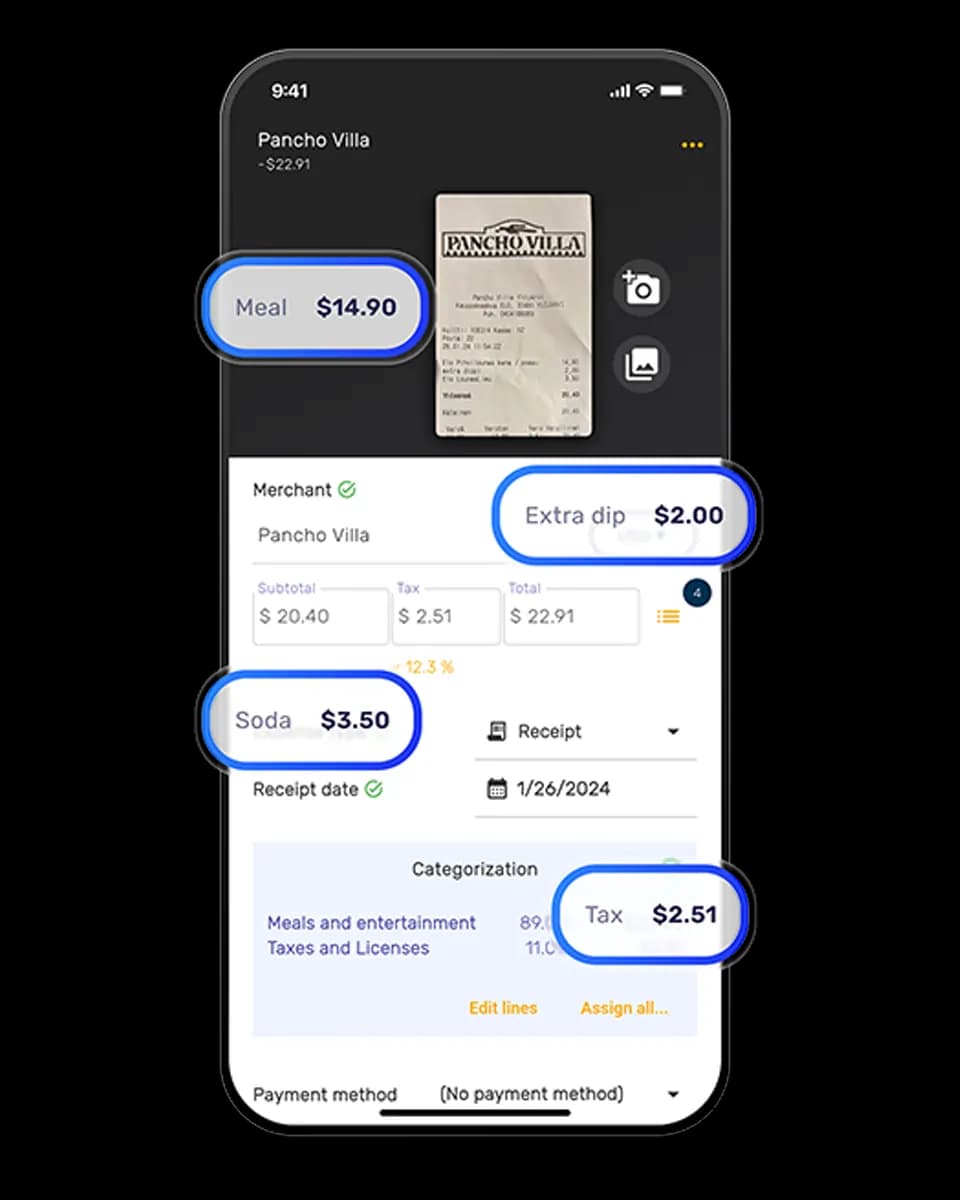
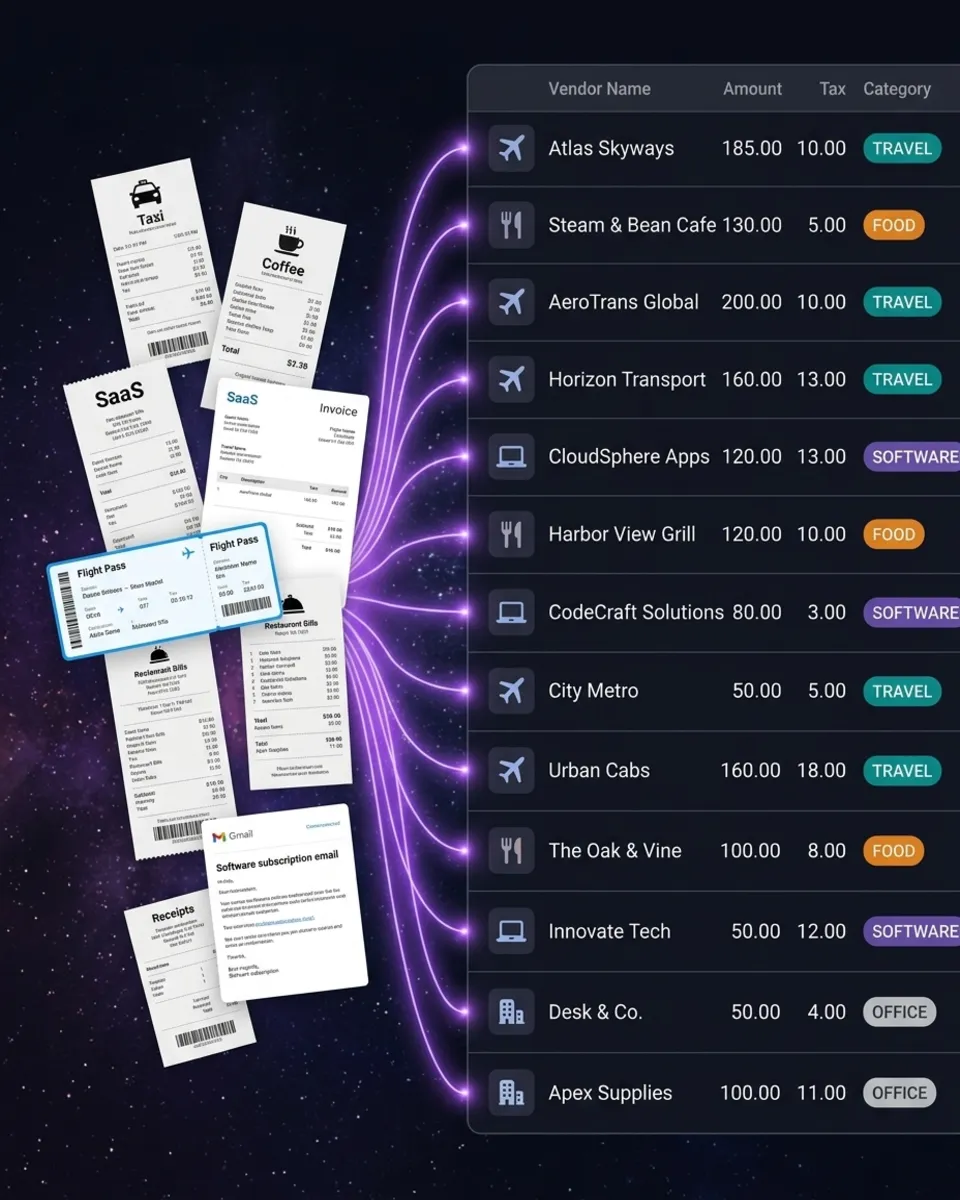
The number above is only as good as the expenses behind it. Snap a receipt at the counter and SparkReceipt reads the merchant, date, total, and sales tax in seconds, then sorts it into a category. Forward an email receipt or import a bank statement and the same thing happens. Nothing is left in a shoebox to be typed up later, so the profit you file is the real one. On iPhone, Android, and the web.
Filing-time figures ready when you are
Come filing time your income and expenses are already categorized and totalled, so working out profit for your T2125 is a matter of reading it off, not rebuilding a year of spending. Export the figures to a spreadsheet, or invite your accountant into the same account for free. Either way the records sit behind the return if the CRA ever asks.
How self-employed tax works in Canada
If you work for yourself as a sole proprietor, your business profit is your income, reported on form T2125 with your personal return. Three charges come out of that profit for 2026:
- Federal income tax, from 14% on the first bracket up to 33% on the highest, after the federal basic personal amount.
- Provincial or territorial income tax, at your province's own rates and basic personal amount. Quebec runs its own income tax and applies a 16.5% federal abatement, so its mix looks different from the rest of the country.
- CPP contributions. Unlike an employee, who splits CPP with an employer, a self-employed person pays both halves: 11.9% on profit between $3,500 and $74,600, plus the second CPP contribution on profit above that. In Quebec you pay QPP instead, at a slightly higher rate.
What you can deduct
Your tax and CPP both start from profit, so every deductible expense lowers them. Common ones for self-employed Canadians include:
- Supplies, materials, and the direct cost of what you sell
- Tools, software, and subscriptions used for the business
- Motor vehicle costs for business driving, and business travel
- The business-use-of-home share of your rent, utilities, and upkeep
- Phone and internet used for work
- Accounting fees, business insurance, and interest on a business loan
Keep the receipt behind each one. The CRA can ask you to support a deduction, and you generally keep your records for six years. The expense tracker keeps the image attached to every line.
When you file and pay
The tax year is the calendar year. If you or your spouse had self-employment income, your return is due June 15. But any balance you owe is due April 30, so it is worth working out the number early even though the return itself can come later. Once your business revenue passes $30,000 in a year you also have to register for and charge GST/HST, which is separate from the income tax and CPP this calculator covers.
Cut the shoebox at filing time
The tax itself is fixed by your profit, your province, and the rates. What you control is how much of the year you spend reconstructing it. Recording income and expenses as they happen, with the receipt attached, turns filing into reading off a total rather than a weekend sorting through statements. If you would rather hand it over, your accountant works in the same account for free.
Frequently Asked Questions
You pay federal income tax, provincial or territorial income tax, and CPP, all on your profit after deductible expenses. Federal rates run from 14% to 33% after the basic personal amount; provincial rates and amounts vary by province; and self-employed CPP is 11.9% on profit between $3,500 and $74,600 plus the second CPP contribution above that. Pick your province in the calculator to see your own figure.
A self-employed person pays both the employee and employer halves of CPP: 11.9% on profit between $3,500 and $74,600 in 2026, plus the second CPP contribution of 8% on profit between $74,600 and $85,000. In Quebec you pay QPP instead, at 12.6% on the base plus the second contribution. This is on top of your income tax.
Yes. Quebec administers its own income tax with its own brackets and basic personal amount, and applies a 16.5% abatement to your federal tax. Quebec residents also pay QPP rather than CPP, at a slightly higher rate. Choose Quebec in the calculator to use the Quebec brackets, the abatement, and QPP.
You can deduct expenses incurred to earn business income: supplies and materials, tools and software, motor vehicle and travel costs, the business-use-of-home share of your home costs, business phone and internet, and professional fees like accounting and insurance. Each deduction lowers the profit your tax and CPP are based on, so keeping the receipts is what protects it.
If you or your spouse had self-employment income, your return is due June 15. However, any balance owing is due April 30, so interest starts from May 1 on unpaid amounts. Once your revenue passes $30,000 you also need to register for GST/HST, which is separate from income tax and CPP.
It uses the 2026 federal and provincial brackets and basic personal amounts, plus self-employed CPP or QPP, and assumes self-employment is your only income. It does not model CPP deductibility, provincial surtaxes or health premiums, the basic personal amount reduction on high incomes, EI, or GST/HST, so treat it as an estimate and confirm with the CRA, Revenu Québec, or an accountant.
More tools and guides
Mileage Rate Calculator
Work out the CRA per-kilometre allowance for business driving
Home Office Calculator
Work out your CRA business-use-of-home deduction
Expense Report Template
Free Excel and Google Sheets template, with an example
Receipt Scanner
Scan any receipt with AI in seconds
Bank Statement Extractor
Turn a PDF statement into categorized transactions
For Accountants
Invite your accountant into your account for free